


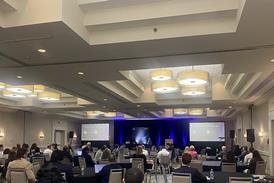


DOJ wants less monitoring, more self-disclosure and fine reductions, Galeotti says

The Criminal Division of the Department of Justice (DOJ), continuing its aggressive, pro-business stance, has revamped key, white-collar crime enforcement policies, including clarifying fine reductions in its self-disclosure program and curbing its use of monitorships, Matthew Galeotti, head of DOJ’s criminal division, announced on Monday.
The DOJ is also reviewing its corporate whistle-blower awards program to bring it more in line with the priorities of the current administration, Galeotti said during the Securities Industry and Financial Markets Association’s Anti-Money Laundering and Financial Crimes program, in Washington, D.C.
THIS IS MEMBERS-ONLY CONTENT
You are not logged in and do not have access to members-only content.
If you are already a registered user or a member, SIGN IN now.
Related articles
-
 Article
FinCEN cuts off 10 Mexican casinos from U.S. financial system for laundering cartel drug money
Ten Mexican cartels will be severed from the U.S. financial system for laundering money for the Sinaloa Cartel criminal organization, according to the U.S. Department of the Treasury’s Financial Crimes Enforcement Network (FinCEN).
-
 Premium
Q&A with former FCPA Unit chief Charles Duross on the DOJ’s monitorship policy
Compliance Week recently interviewed Charles Duross, former Chief of the DOJ’s Fraud Section’s FCPA Unit, to talk about the Department of Justice’s recently revised monitorship policy.
-
 Basic Page
‘Extraordinary cooperation’ pays off for PFS Investments
As regulators shift toward rewarding transparency, self-regulation and self-reporting, the way PFS Investments handled a longstanding problem serves as an example of how proactive remediation can turn a costly compliance error into a manageable regulatory outcome.
More from Regulatory Policy
-
 Article
New DOJ fraud division means broad realignment of resources and attorneys
A new Department of Justice (DOJ) division will lead investigations of government fraud, and take over duties—and staff, and funds– currently handled by other DOJ divisions and government agencies, Acting Attorney General Todd Blanche announced.
-
 Premium
Hong Kong wants to know if your bank has a culture problem
The Hong Kong Monetary Authority’s Bank Culture Reform program is in its eighth year. Phase 2 of its misconduct-sharing scheme covers more than 50,000 banking professionals. The shift signals regulators are evaluating whether culture works, not just prescribing rules.
-
 News
NewsFinCEN proposes overhaul of AML rules, ending 2024 risk assessment requirements
A rule overhaul proposed by the U.S. Treasury Department’s Financial Crimes Enforcement Network is designed to reduce compliance burden, which would free up banks from tracking all but the most egregious illicit financial activities.